Products available at afs.
Ceramic sanding belts vs aluminum oxide.
This habit means that ceramic grains break down in a controlled manner extending the.
Most versatile abrasive for use on all wood sanding applications from stock removal to finish sanding.
The combination of a very good shelf life and lower cost is what makes aluminum oxide stand out over other forms of sandpaper including silicon carbide.
Although it is stronger than aluminum oxide zirconia may have difficulties grinding mill scale.
In the end both types of belts are excellent belts.
As high performance belts both zirconia and ceramic sanding belts will last longer and remove metal faster than aluminum oxide or silicon carbide sanding belts.
Ceramic abrasives have a micro crystalline habit and are more uniform in their structure than either aluminium oxide or zirconia abrasives.
Available in open and closed coat.
These hi performance grains have the ability to constantly resharpen as they wear providing fast cutting action through their usable life.
Zirconia will have a much longer life than aluminum oxide be more fiable and provide a cooler sanding grinding experience.
To see how different brands of sandpaper stack up see torture test.
Used primarily on metal applications.
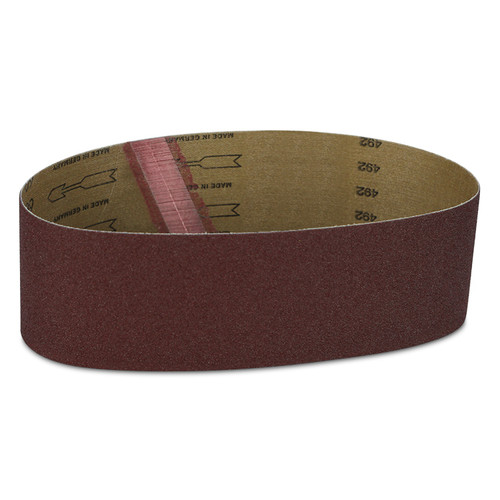
Recognized by its brownish red color.
Both grains are considered hi performance.
Both belts have the ability to resharpen as they wear and both are primarily used on metal applications.
Open coat resists loading due to spreading the grains apart on the backing material.
Aluminum oxide is the most common abrasive used on sandpaper.
When sanding harder metals such as titanium or stainless steel aluminum oxide does not have as long of a life as say ceramic or zirconia.
Additionally aluminum oxide is exceedingly durable.
On the other hand closed coat sandpaper produces a more uniform scratch pattern making it a good choice for sanding finishes.